
Administrative Law
Chapter 2 -
Part 4
TAKE HOME EXAM - True of False?
1. Administrative Law defines legal powers and limits of agencies.
2. The judicial branch creates administrative agencies.
3. A Reorganization Plan creates a new agency by transferring powers
from other agencies.
4. The first administrative law established the Justice Department
5. The Delegation Doctrine is the legislature giving some powers to
agencies.
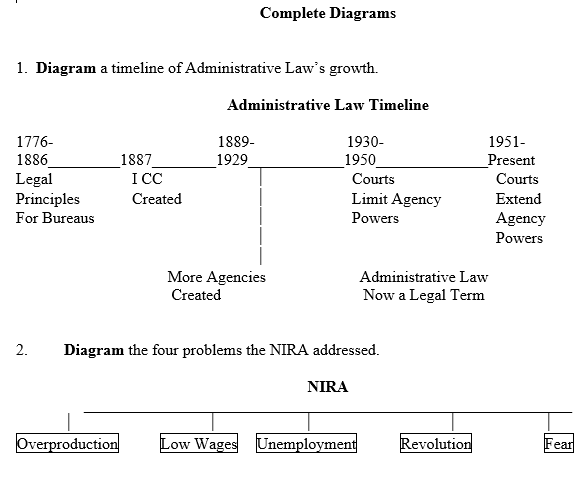
6. In Panama Refining (1935) delegation was struck down by the
Supreme Court during recovery from the Great Depression.
7. The first administrative law established the Interstate Commerce
Commission (ICC)
8. Congress creates administrative agencies.
9. Administrative laws define an agency’s legal limits.
10. The executive branch supplies money to agencies.
TAKE HOME EXAM ANSWERS - True of False?
TRUE 1. Administrative Law defines legal powers and limits of agencies.
FALSE 2. The judicial branch creates administrative agencies.
TRUE 3. A Reorganization Plan creates a new agency by transferring powers
from other agencies.
FALSE 4. The first administrative law established the Justice Department
TRUE 5. The Delegation Doctrine is the legislature giving some powers to
agencies.
TRUE 6. In Panama Refining (1935) delegation was struck down by the
Supreme Court during recovery from the Great Depression.
TRUE 7. The first administrative law established the Interstate Commerce
Commission (ICC)
TRUE 8. Congress creates administrative agencies.
TRUE 9. Administrative laws define an agency’s legal limits.
FALSE 10. The executive branch supplies money to agencies.
Three Venues for Research
1. In Book: Explain the roles of the three branches of government:
Executive, legislative, and judicial
2. At Library: (a) Count the number of mentions of agencies in two newspapers
and one news magazines.
Helps students to be aware that agencies are involved of many of the
Daily news stories that they read.
3. On Internet: Look up the Securities and Exchange Commission and its role in the 2008/2009 Stock Market collapse. Consult the following website: www.sec.gov